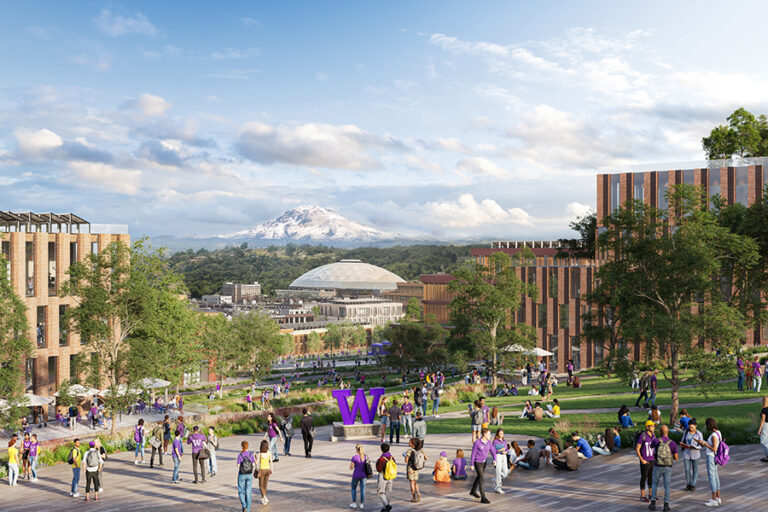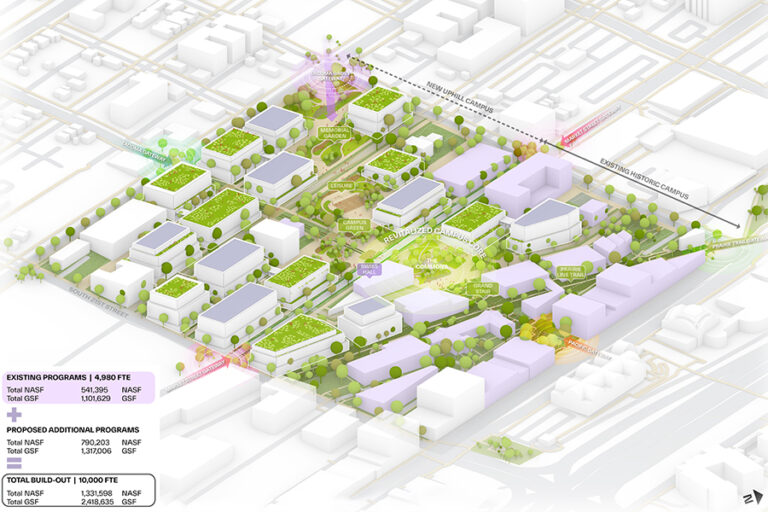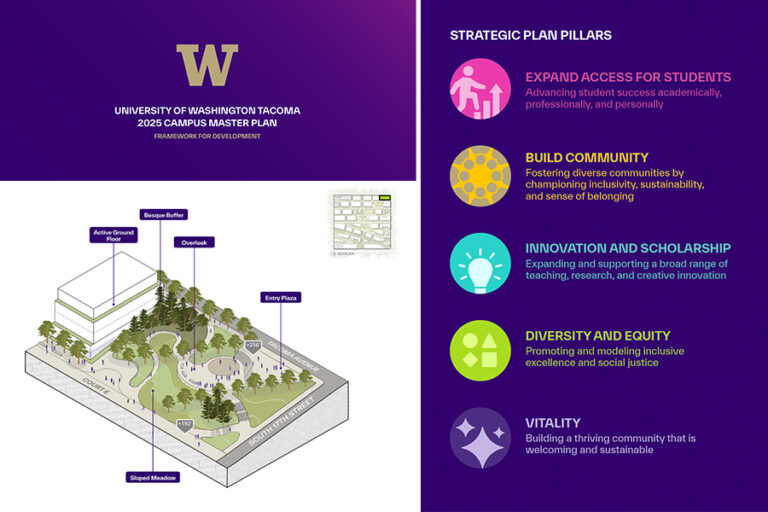
As Consulting Landscape Architects and Planners to BIG Architects, OLIN’s work furthered the University of Washington Tacoma’s mission to cultivate an inclusive, connected academic environment within a complex urban fabric. The proposal and its surrounding landscape integrate the site’s dramatic topography, mobility networks, and regional ecology to create a cohesive campus identity that honors its Pacific Northwest context.
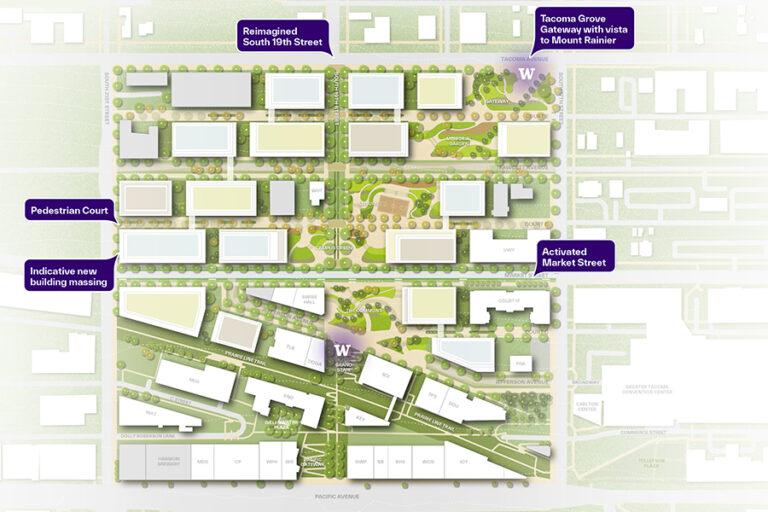
The framework plan establishes a new central spine of open spaces that comfortably navigates the sloping hillside landscape while orienting the campus toward iconic views of Mount Rainier and Commencement Bay. The framework envisions a “multifold landscape,” a series of inventive typologies that transition from the active, urban historic core near Market Street to increasingly serene, biophilic environments as the campus expands uphill.
The framework weaves accessible hillside paths and shortcuts through the central open space, ensuring seamless connections between the existing campus axis and future districts. A proposed trolley connection on 19th Street and reimagined “Micro-mobility” corridors on Fawcett and Jefferson Avenues serve to bridge the 150-foot elevation difference, functioning as both transit infrastructure and civic connectors.
Beyond immediate development, the plan sets a growth strategy for the campus’s future through an innovative land stewardship approach. Recognizing that full build-out will unfold over time, the plan secures undeveloped lands with native meadows and gateway plantings, ensuring these interim spaces remain welcoming, safe, and ecologically functional for the community. By integrating stormwater management into these open spaces and honoring cultural histories, such as the Japanese Language School, the framework ensures the campus remains a resilient and integrated civic hub.