ORIGINAL SOURCE: Press Release from Empire State Development and New York State Parks, Recreation and Historic Preservation, 09 October, 2024.
https://esd.ny.gov/esd-media-center/press-releases/esd-nys-parks-announce-consultant-design-new-high-falls-state-park-roc
High Falls State Park Will Serve as the Heart of the ‘ROC The Riverway” Initiative Which is Transforming the Area Around the Genesee River Waterfront
Public Meeting Scheduled and Website Created to Provide Community with the Opportunity to Weigh in on Park Design
$8 Million NYS Investment Supports the Finger Lakes Region’s Comprehensive Strategy to Revitalize Communities and Grow the Economy by Providing Recreational and Interpretive Opportunities for Residents and Visitors
Empires State Development (ESD) and New York State Office of Parks, Recreation and Historic Preservation today announced that national landscape architecture and urban design firm OLIN has been awarded the contract as the park design consultant for High Falls State Park set to be initiated in Downtown Rochester. OLIN, which maintains offices in Pennsylvania and California, will partner with local firms Highland Planning, LiRo Engineers, TY Lin, Trophy Point, Flaum Management, and other consultants to bring the vision for the new park to life. Remediation work along the three-quarter mile-long stretch of the Genesee Gorge is already underway and is expected to last another five years. Construction on the new park is expected to begin sometime in 2026 or 2027.
Governor Kathy Hochul said, “Downtowns are what bring communities together and provide residents with a sense of pride. Our State Parks are some of New York’s most-treasured resources and this transformative project will serve to connect future generations with a beautiful and sustainable space, building on my administration’s commitment to strengthening communities.”
OLIN is comprised of landscape architects, planners, urban designers, and support staff whose work aims to create distinguished landscapes and urban designs worldwide. The company is globally admired for ensuring projects are designed using innovative and tailored approaches to community engagement, environmental and social responsibility and justice, and financial and operational sustainability.
OLIN Managing Partner Michael Miller said, “We are thrilled to be leading the design of this compelling and transformative project for the people of Rochester. High Falls is a park site like no other, offering natural wonder and cultural history in the heart of a historic downtown. We are grateful to State Parks, ESD, the City of Rochester, and the many stakeholders and community members who have worked tirelessly to get this project off the ground and are looking forward to working collaboratively with everyone to refine and realize the vision of High Falls State Park.”
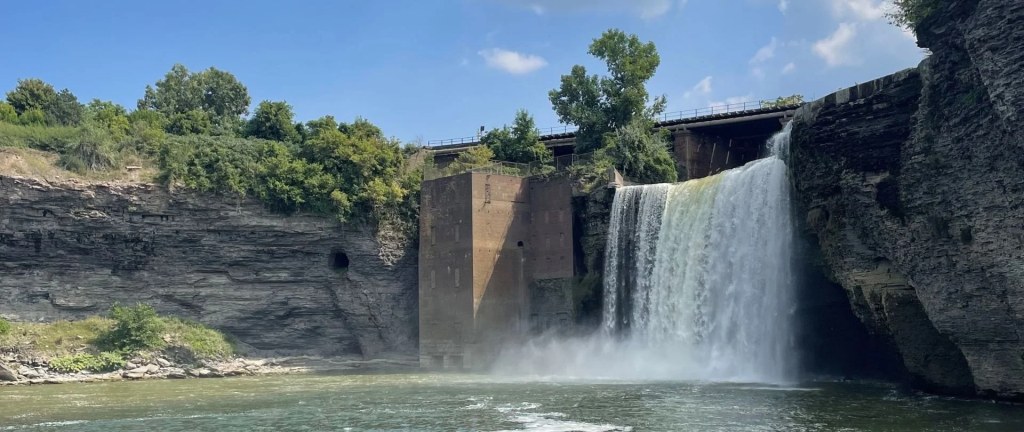
ESD, New York State Office of Parks, Recreation and Historic Preservation OLIN and its community partners will hold a High Falls Park Open House on November 13th, from 4-7 PM at Monroe Community College’s downtown campus on State Street in Rochester where they will provide the community with an update on the planning process and ask the community to weigh in on considerations that will influence the park design. That design will be imagined using the existing High Falls waterfall as its heart. The public can also access information about the planning process at www.HighFallsStateParkNY.com.
Empire State Development President and CEO & Commissioner Hope Knight said, “We continue to be incredibly excited about what the future holds for in the heart of downtown Rochester thanks to the establishment of High Falls State Park and what it will bring to the city center. Thanks to the OLIN team, local stakeholders, and to the continued community support, this multi-year project will truly be a game-changer not only for city residents but will give visitors yet another reason to visit the beautiful flower city.”
New York State Office of Parks, Recreation & Historic Preservation Commissioner Pro Tempore Randy Simons said, “State Parks is pleased to see the High Falls State Park project continue to move in a positive direction. As the first state park in the City of Rochester, High Falls will offer phenomenal recreation opportunities and economic benefits to local neighborhoods and the region at large, allowing access to this historically significant area for the first time.”
Off limits to the public for many years due to its formal industrial use, once completed, the park will serve as the marquee piece of Rochester’s “ROC The Riverway”-a collaborative effort of the state, city and regional economic development partners aimed at revitalizing the area along the Genesee River. This unique natural park in an urban setting will provide green space and recreational amenities for local communities and serve as a regional destination. Reclaiming the area for public enjoyment for the first time in over a century will also help visitors to rediscover its rich geologic and historic industrial past. Investment in the site offers opportunities for both ecological restoration and a catalyst for economic growth.
Phase one of the “ROC the Riverway” initiative included investments in 13 targeted projects, all of which have been completed or are currently under construction or design – included are the transformation of Austin Steward Plaza, Genesee Gateway Park, ROC City Skatepark the Brewery Line Trail, as well as the ongoing Aqueduct Reimagined project adjacent to the new Constellation Brands global headquarter campus.
Phase two of the initiative, launched by the Governor in 2022, is highlighted by the establishment of the new state park within the historic river gorge. To date, New York State has committed $8 million in design funding to assist with the transformation.
Rochester Mayor Malk D. Evans said, “As we steadily work towards the creation of High Falls State Park and ROC the Riverway projects continue to be realized, we are transforming Rochester’s connection to the Genesee River and its rich history. This state park will be a new centerpiece for our downtown, offering residents and visitors a place to gather and celebrate Rochester’s natural beauty. With the support of Governor Hochul, we’re making tremendous strides toward revitalizing our waterfront and creating a unique destination that strengthens our region and fuels economic growth.”
State Senator Samra Brouk said, “I am excited to see concrete plans for High Falls State Park coming together. Revitalizing High Falls for our community will restore its historic wonder, improve the landscape, and feature new amenities for visitors. We are grateful for investments in the ‘Roc the Riverway’ initiative and look forward to the restoration of this land for the enjoyment of all.”
State Assemblymember Harry Bronson said, “High Falls State Park represents a transformative and bright future for Rochester’s historic Downtown, and the hiring of OLIN to lead the design is an exciting next step. Their expertise combined with a focus on community engagement, sustainability and social justice is key to completing High Falls State Park in a way that truly honors our city and community.”
State Assemblymember Demond Meeks said, “As one of the centerpieces of the ROC the Riverway initiative, High Falls is both a historical landmark and a vibrant neighborhood that will benefit from this revitalization. I appreciate the significant progress and investments being made toward realizing Rochester’s first state park. It is important that the members of our community take this opportunity to share their ideas and help shape this project in a manner that will best serve our neighbors and families.”
State Assemblymember Sarah Clark said, “The new High Falls State Park is an incredible opportunity to transform and celebrate this amazing natural resource in the heart of our city. Moving along in the process to make this a reality is exciting and I welcome OLIN to Rochester. I look forward to their proposals and the continued chances for our community to engage in the process.”
Monroe County Executive Adam Bello said, “Monroe County is home to some of the most beautiful and unique parks in the entire state. High Falls State Park will add to the vibrancy of downtown Rochester and provide visitors with an up-close experience of the beauty of the falls and the Genesee Gorge, while also honoring the rich industrial history that shaped our city. Thank you, Governor Hochul, for your commitment to investing in our infrastructure and expanding access to the outdoors for families across our community.”
Avangrid, parent company of RG&E, CEO Pedro Azagra said, “High Falls State Park is a feather in the cap of the Flower City, and we are thrilled to be part of the ROC the Riverway effort to revitalize this historic natural landmark, which will be a resource for the community. Thanks to Governor Hochul and local leaders for her stewardship of this vital development work.”
For additional information about ROC The Riverway, visit: https://www.cityofrochester.gov/departments/department-environmental-services/roc-riverway.
Accelerating Finger Lakes Forward
Today’s announcement complements “Finger Lakes Forward,” the region’s comprehensive strategy to generate robust economic growth and community development. The regionally designed plan focuses on investing in key industries including photonics, agriculture and food production, and advanced manufacturing. More information is available here.
About Empire State Development
Empire State Development (ESD) is New York’s chief economic development agency (www.esd.ny.gov). The mission of ESD is to promote a vigorous and growing economy, encourage the creation of new job and economic opportunities, increase revenues to the State and its municipalities, and achieve stable and diversified local economies. Through the use of loans, grants, tax credits and other forms of financial assistance, ESD strives to enhance private business investment and growth to spur job creation and support prosperous communities across New York State. ESD is also the primary administrative agency overseeing the Regional Economic Development Councils and the marketing of “I LOVE NY” the State’s iconic tourism brand. For more information on Regional Councils and Empire State Development, visit www.regionalcouncils.ny.gov and www.esd.ny.gov.
About the New York State Office of Parks, Recreation and Historic Preservation
The New York State Office of Parks, Recreation and Historic Preservation oversees more than 250 parks, historic sites, recreational trails, golf courses, boat launches and more, which saw a record 84 million visits in 2023. For more information on any of these recreation areas, visit the NYS Parks website, download the free NY State Parks Explorer app, or call (518) 474-0456. Join us in celebrating our Centennial throughout 2024, and connect with us on Facebook, Instagram, X (formerly Twitter) and the OPRHP Blog.