After eight months of community engagement and feedback, the City of LA is seeking input on the draft Park Needs Assessment. The Public will have 45 days to share their comments.

LOS ANGELES (September 2, 2025) – The City of Los Angeles Department of Recreation and Parks (RAP) today released a draft Parks Needs Assessment (PNA), which provides a roadmap for the city to improve a parks and recreation system that has been hit hard by stagnant spending and declining staffing. The PNA identifies projects and strategies that could produce tangible improvements to the system very quickly that would benefit many residents. It also lays out strategies for steadily bringing the whole system up to par with peer cities that have fared much better in recent years.   

The draft is now out for public review and comment until October 15.

The draft PNA is the result of:  

  • extensive and deep community engagement that began in January 2025
  • a park-by-park analysis of conditions and amenities
  • an innovative approach to prioritizing spending on improving existing parks and building new parks based on where investments will serve the most people in the highest areas of need
  • a thorough analysis of the history of funding for recreation and parks in the City, the causes of the current budget and staffing shortfalls, and a variety of options for increasing revenue and finding savings while improving and expanding the system in the years to come

The draft PNA is informed by the results of a citywide survey of residents and dozens of community meetings across Los Angeles. It evaluates the state of more than 16,000 acres of public parkland in nearly 500 parks as well as over 100 recreation centers and other facilities. It will guide future investment in park infrastructure and amenities to help ensure the city’s park system can properly function and provide safe, clean, enjoyable parks and recreation facilities for all Angelenos.

“We appreciate the input of the thousands of Angelenos who have informed this draft PNA,” said RAP General Manager Jimmy Kim. “We believe it can help guide RAP’s investments, operations, maintenance, and programs for years to come, focusing on the priorities that matter most to our communities. We’re excited to share the draft now and invite feedback from residents as we finalize it.” 

LA’s PNA Is State-of-the Art

The draft PNA is a once-in-a-generation effort that has harnessed the best, most up-to-date knowledge and practices in parks planning nationwide. It has employed deep data analysis, extensive and diverse community engagement strategies, an innovative tool for prioritizing investments called PerSquareMile, and a rigorous analysis of past, present, and potential future funding for parks and recreation in LA.

The draft PNA includes a thorough park-by-park and facility-by-facility analysis of RAPs current system. It proposes a system of new park classifications.  It sets targets for increased system-wide park amenities. And it defines guidelines for future site planning and community engagement. 

“This park needs assessment is truly best in class,” said Jon Christensen, an adjunct assistant professor in UCLA’s Institute of the Environment and Sustainability and Luskin Center for Innovation, who has studied park needs assessment nationwide. “It uses state-of-the-art methods in its analysis of current conditions and finances, as well as in its robust community engagement. And it brings an innovative approach to prioritizing needs that can guide future investments to serve the most people in highest need across Los Angeles.”

RAP’s Budget Is Not Keeping Up with Need

LA parks are popular, but parks funding is lagging behind the growth of the city. The draft PNA found that RAP’s budget has not kept up with the City’s overall budget growth or inflation. RAP’s operating budget grew 35% between fiscal years 2009 and 2023, half the rate of the City’s 68% overall budget increase during the same period. The Los Angeles parks system continues to grow, but faces severe challenges as its workforce shrinks, making it more difficult to maintain facilities, offer programs, and care for parks and open spaces. Full and part-time staff at RAP has decreased since 2008 as park acreage has increased. 

Despite parks being a very popular amenity in Los Angeles according to a statistically valid survey of residents, the City spends less on parks than peer cities — only $92 per capita. The Trust For Public Land’s annual ParkScore survey ranks the largest 100 cities in the United States. Los Angeles is currently ranked 90th, largely because of inadequate funding. RAP’s operating budget is funded by the City-Charter Property Tax Revenue Allocation, earned revenue, and the General Fund.  

“Most urban park systems across the country have  faced funding challenges over the last half century or more,” said Connie Chung, Managing Partner at HR&A Advisors in Los Angeles. “We know parks are valuable assets that have a major return on investment, and the strongest park systems take a multifaceted approach to funding. This PNA offers a roadmap to funding the city’s park system that will help address current needs and improve our parks in the years to come.”

“L.A. has fallen in our national ranking because of inadequate funding for parks and the fact that low-income communities of color have fewer parks,” explained Guillermo Rodriguez, California state director the Trust for Public Land. “This new Park Needs Assessment clearly identifies pathways to solve both of those problems so that L.A. can build back a world-class park system over time. Now we all need to work together to create a new funding streams for recreation and parks in the city.”

The PNA Has a Plan for Measurable Results

While funding is tight and new revenue streams are needed, the PNA is a guide to bring measurable results to LA parks now. The draft PNA proposes a prioritization strategy based on feedback from residents across the city and input from the PNA’s Steering Committee, Neighborhood Councils, a Technical Advisory Committee, Advisory Boards, and interested groups. The prioritization process identifies the areas that most need improvement as well as new and expanded park space. It also provides guidance for operations and maintenance priorities. 

“The PNA is a roadmap for how to address the current situation and over time strengthen what can be a world-class park system,” said Jessica Henson, a landscape architect and planner with OLIN, who leads the PNA consultant team.“Nearly a century ago the Olmsted-Bartholomew Plan for Los Angeles proposed 71,000 acres of parkland and numerous strategies to connect parks across the region, but it was never realized, largely due to governance issues. As the Great Depression began and budgets tightened, civic leaders shelved the plan. A century later we are still grappling with a lack of adequate parks and open space in many parts of the city, plus a system that suffers from lack of adequate investment. Today, this PNA brings into focus the priorities and strategies  that will enable Angelenos to have the park system they deserve in the 21st century.” 

Process

The PNA process included hundreds of opportunities for residents of LA to share ideas and feedback through a variety of engagement methods, including in-person and virtual community meetings, pop-up events, partnerships with community-based organizations, equity-focused events, key group meetings, surveys, and a project website. With a focus on equitable, innovative, and creative community engagement, the process aims to ensure that all voices are heard and valued, using both in-person and digital tools to encourage active participation. The feedback gathered throughout this process will inform future decisions related to park improvements, funding, and new development.

Starting September 1, 2025, the PNA will enter into a 45-day review process before being finalized and presented to the Board of Recreation and Park Commissioners for adoption in December. The public comment period will close October 15, 2025.   

For more information, and to stay updated on community events and engagement opportunities, please visit the project website at needs.parks.lacity.gov.

About City of LA Parks

The Department of Recreation and Parks operates around 500 park sites and 92 miles of trails that cover more than 16,000 acres of land in Los Angeles. 

The park system includes some of the world’s most iconic parks such as Griffith Park, Sepulveda Basin, Echo Park, and MacArthur Park, as well as hundreds of community and neighborhood parks, Venice Beach, Cabrillo Marine Aquarium, and 12 museums. 

Project Team

The project is being led by the City of Los Angeles Department of Recreation and Parks. A Technical Advisory Committee, a Steering Committee, City of LA elected offices and staff, government departments, and organizations that have provided guidance to the project consultant team.

Through a competitive “request for proposal” process, the City selected OLIN and their team includes the subconsultants HR&A Advisors, Kounkuey Design Initiative, Agency: Artifact, The Robert Group, Estolano Advisors, Geosyntec Consultants, GreenInfo Network, Better World Group, Dharam Consulting, Calvada, LANDAU Design + Technology, ETC Institute, and West of West Architecture, and was approved by a unanimous vote of the Board of Recreation and Parks Commissioners in December 2024.

  • Thursday, September 4, 6:00pm – 8:00pm
    Bellevue Recreation Center, 826 Lucile Ave, Los Angeles, CA 90026
  • Saturday, September 6, 10:00am – 12:00pm
    Westwood Recreation Center, 1350 Sepulveda Blvd., Los Angeles, CA 90025
  • Tuesday, September 9, 6:00pm – 7:30pm
    Virtual Via Zoom
  • Wednesday, September 10, 6:00pm – 7:30pm
    Deep Dive Webinar: Budget, Finance, and Decision Making Virtual Via Zoom
  • Thursday, September 11, 6:00pm – 7:30pm
    Deep Dive Webinar: Classifications, Level of Service, and Guidelines Virtual Via Zoom

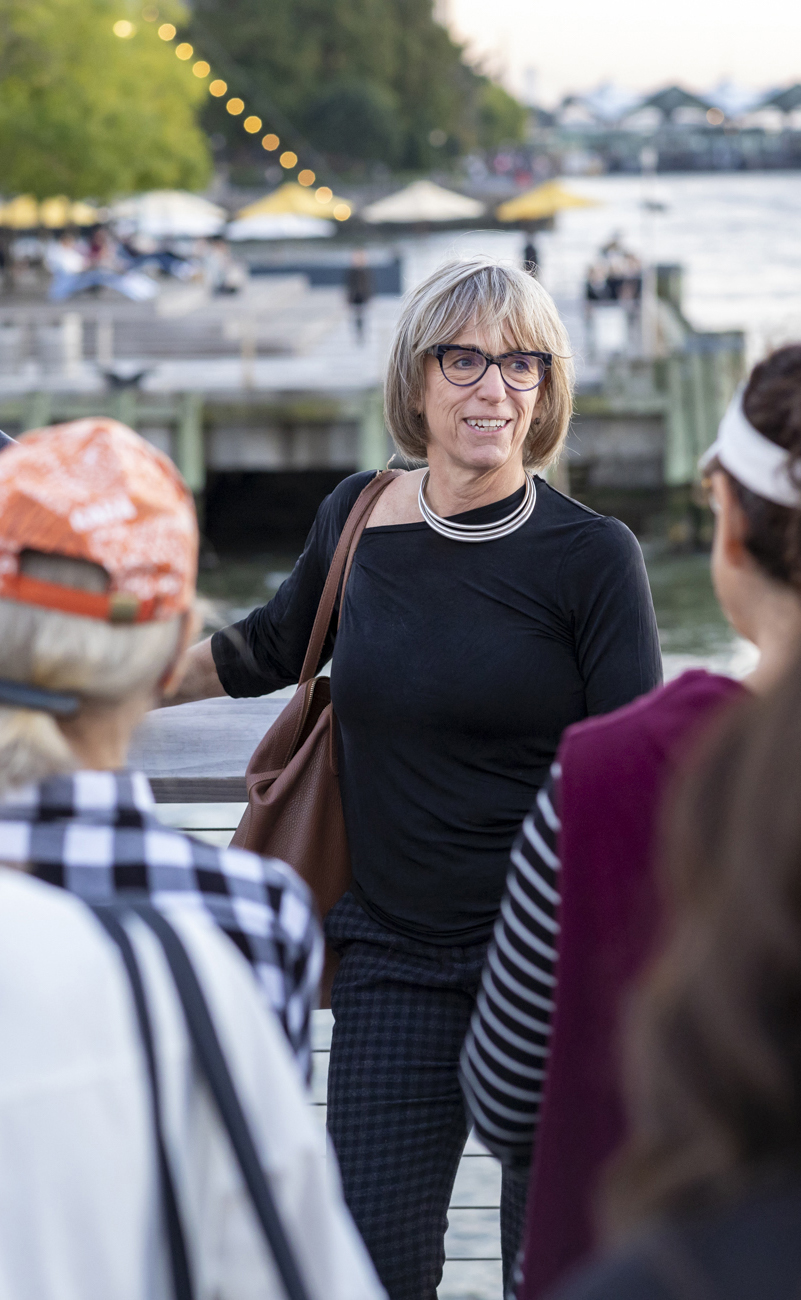
One of four Landscape Architects promoted to Partner at OLIN this year, we’d like to introduce Janelle to those who haven’t had the privilege of meeting her. She recently took a moment to reflect on what this role means to her, and we thought it would be great to share her thoughts here. Consider yourself IN the conversation:

If you know me, you know I value listening over speaking, and reflection over reaction. I don’t always lead from the front with volume or visibility, but I lead by presence, by consistency, and by a deep commitment to understanding before acting. This style allows me to see what others might overlook. It gives me the space to observe patterns, hear what’s not being said, and translate those insights into a shared path forward. I believe meaningful change often starts in those quiet moments—where listening creates clarity, and clarity creates momentum.

Whether it is uncovering a community member’s unspoken concern or bridging communication between disciplines, I find energy in helping people feel heard and aligned. I often serve as a translator; restating goals, clarifying intentions, and finding the common ground that allows teams to move forward. I don’t see this approach as just a communication tool, but also a mindset I bring to every stage of the design process, ensuring that we’re not only solving the right problem, but doing so in a way that reflects collective values and aspirations. I’m driven by the desire to connect people and ideas in ways that unlock clarity, build trust, and lead to meaningful progress.

I also recognize that who I am, not just how I lead, carries weight. As a Black woman in a profession where fewer than 1% of licensed landscape architects are Black, and only 0.3% are Black women, my presence alone challenges norms and reshapes expectations. That reality isn’t lost on me. I know that representation matters, and I carry that responsibility with pride and purpose. It shapes what’s possible. It tells others they belong. The phrase “If you can see her, you can be her” resonates deeply. For over a decade, I’ve worked with both professional organizations and nonprofits to expand awareness of this field among young students, helping them imagine a future in a profession that has rarely reflected them.

What makes me unique is not just my perspective—it’s how I use it. I show up every day grounded in the belief that leadership is an act of service. That transformation can begin with presence. And that opening doors for others is as vital as any design we leave behind.

I strongly believe that what should be front of mind for everyone in design practice [NOW] is Climate Adaptation and Resilience. There is certainly a focus on this issue at-scale, but even at the site level, solving for extreme weather, urban heat, sea level rise, and the loss of biodiversity must be a priority so that we can have a built environment that functions as a network of spaces that collectively strive to address these very serious issues. We also need to move towards  a position where we are then shifting from adaptation to regeneration—to actively repair the built environment. These impacts are ecological, social, and ethical, starting with our most at-risk communities.

Looking ahead into how I will continue to advance these interests and priorities while building on OLIN’s body of work, I think of it as a question of geography and impact; I’m looking forward to creating a network of relationships in the Midwest and the Southern region of the country, building upon the amazing projects that my Partners at OLIN have executed in middle America. Working in next-tier cities, I am specifically interested in improving or enhancing urban ecosystem services as a way to positively impact the lives and wellbeing of the general public. I seek to do work that is accessible to the greatest cross-section of people on this earth, through parks and public realm, civic institutions, healthcare, housing developments, and institutions of higher learning. I want to improve access to great quality public space—and improve the livelihood, health, and wellbeing of those who need it most—through the work that I do.

I started my career here at OLIN post graduate school, then I transitioned back home to the Midwest. Returning to OLIN after the pandemic was an easy choice, rooted in a sense of alignment of values, of purpose, and of people. Here, people matter—not just as colleagues or clients, but as individuals with stories, perspectives, and passions. I feel genuinely seen and supported, both professionally and personally, in a way that is rare and deeply meaningful.

What originally drew me to OLIN was its design reputation, but what brought me back is its unwavering commitment to purpose. Everything we do is grounded in research, storytelling, systems thinking, and interpretation through Design—tools that don’t just solve problems but invite engagement, reflection, and transformation. There is a clarity in the intention behind our work, and that clarity is contagious. I am surrounded by incredibly bright, inquisitive people who are not only information-seekers but also generous in sharing it out through the work. There is a palpable sense of curiosity—a hunger to learn, to question, to evolve. As a lifelong learner, I thrive in this environment. Simply being in the presence of my colleagues, across all levels, is a form of education every single day.

More than anything, OLIN is about legacy. It’s about nurturing the next generation of leaders in landscape architecture—through forging connections, mentorship, and collaboration. I’m proud to be part of a team that doesn’t just imagine a better future but actively shapes it.

Richard’s “Good Morning” emails reliably fill the OLIN inboxes by 8:00AM on a daily basis. It’s a practice he initiated during the pandemic as a way to both reflect and stay meaningfully in touch. Whether he’s on site covering a new installation, in a fabricator’s workshop, or simply exploring the landscape for inspiration, he hits ‘send’ on this regular communication—to surface and dissect small wonders and big questions, and stimulating a conversation about practice, reverence for nature, and common humanity. It’s how Richard has both embraced and modeled the open studio culture of OLIN.

A leading voice in the firm, Richard became a Design Partner in 2012 and has used this position to bring landscape architecture into unexplored and unconsidered territories in design. From coastal and urban areas confronting climate change to social justice initiatives and circular economy research involving soils and broad-scale infrastructure corridors, he transforms diverse landscapes with equal expertise. Whether working on industrial sites and reclaimed quarries, urban plazas and university campuses, botanical gardens and riverfront parks, or informal settlements and agricultural landscapes, he partners with public housing authorities and top-tier institutions as well as small grassroots communities. Richard’s work seeks to help people find their agency in their geography, he celebrates beauty and potential in the world’s complexity, and cultivates lasting vitality.

Richard looks deep within himself, the profession, and community to cultivate purpose for OLIN and our shared community of practice. When invited to consider the role of Chief Strategy Officer (CSO), his response was, “Why?” Richard was not being cheeky, this is how he operates. He continued, “strategy doesn’t come with the assumption of any kind of steering wheel per se. You’ve got to understand your objectives first, and then you figure out what’s the best way to get there with your strategies.” In considering the objectives, he starts by examining the “Why” because he is interested in the purpose. “People are at their best when they know the work we’re a part of is making change in the world—for a better environment, stronger communities, and that fits our credo to ‘create places that enhance life.’ But that’s not a static position. It’s something you have to figure out every day.”

As Chief Purpose Officer, Richard wants to inspire us to practice the habit of asking “Why?” Engaging others with this provocative curiosity, he will continue the practice of cultivating OLIN’s purposes as a multi-faceted consideration—of everything from our office culture to living systems to communities we serve. In an effort to sustain the zeitgeist of OLIN he also asks, “How are we staying authentic?” He knows that as we continue our success as a multi-generational organization, it is a ‘grass roots’ proposition; we will continue to grow leadership and accountability by expanding and distributing it among those “who are really interested, who have the magnetism and focus to take something further.”

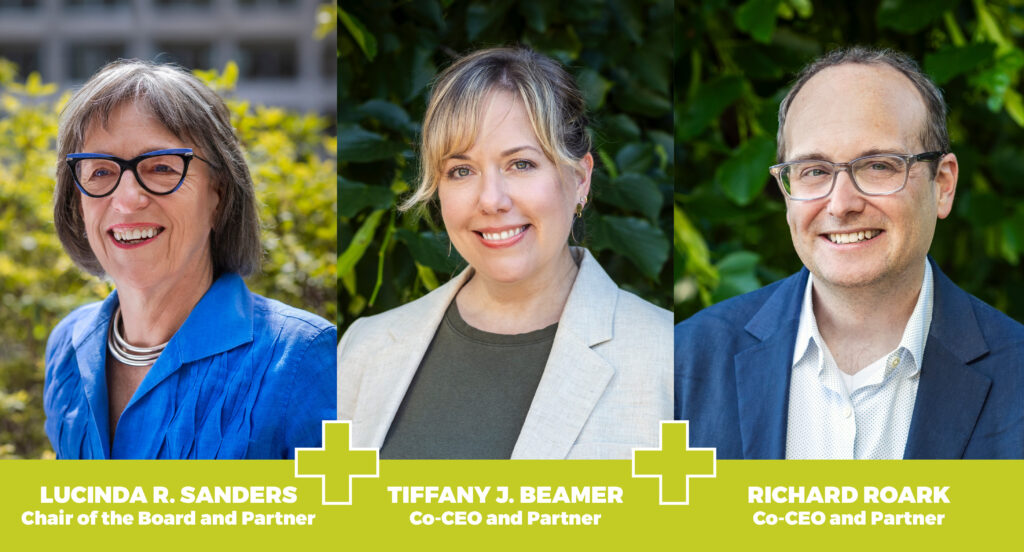
Richard carries a torch lit by our CEO and President Lucinda Sanders, who says, “our success is that we are innovators, we are unafraid to speak up, we are tackling some of the most difficult problems of human civilization. In the context of a strong business model…it’s how we are able to contribute what is the highest and most innovative level.” Sanders reflects, “These are all things that come back to our founder Laurie Olin—he was curious about the world and he put time into it by studying it and drawing it. It was how he figured things out .This has become the ethos of OLIN.” Of Roark, she says, “He exemplifies this aspect of our practice. He’s always thinking about the next thing…is there a better way to try something, what should we be looking at?” On the topic of leadership, Sanders further reflects, “He is very empathic, and I have to say I don’t think I ever want to see leadership here that is not. Ego-led leadership does not work in an organization that is built on a platform of inquiry and collaboration.” She knows Richard will discover and create his role out of things he believes are important for the future of OLIN, leading with intelligence, curiosity, and passion. And Richard will bring others along through a consistent demonstration of his strong value system—an unfailing sense of compassion and duty to our planet which he describes as a “long-term paradigm shift …less heroic or point-focused” and more about “ecological possibility, understanding of economy and health, and the instrumentality of landscape architecture.”  

Today, Richard’s purposeful practice is embodied in nationally significant work at Sojourner Truth State Park in New York, ResilienCity Park in Hoboken, and Caño Martín Peña in San Juan. His leadership at Marie Selby Botanical Gardens has garnered recognition as well, earning OLIN the 2025 Philip Hanson Hiss Award, which celebrates pioneers of innovative modern design. The award honored OLIN’s work on the Botanical Garden Master Plan and Phase 1 Welcome Center, a vision shaped under Richard’s guidance. His elevation to the American Society of Landscape Architects Council of Fellows will be recognized at the 2025 National ASLA Conference as both a personal milestone and an affirmation of his lasting influence on the field.

With insight, compassion, and vision, Richard Roark continues to lead by example—challenging and inspiring those around him to shape a more equitable, ecologically vibrant, and purposeful world through landscape architecture. He is not only helping to define the future of the profession, but also ensuring that OLIN’s enduring mission is carried forward with authenticity and heart.